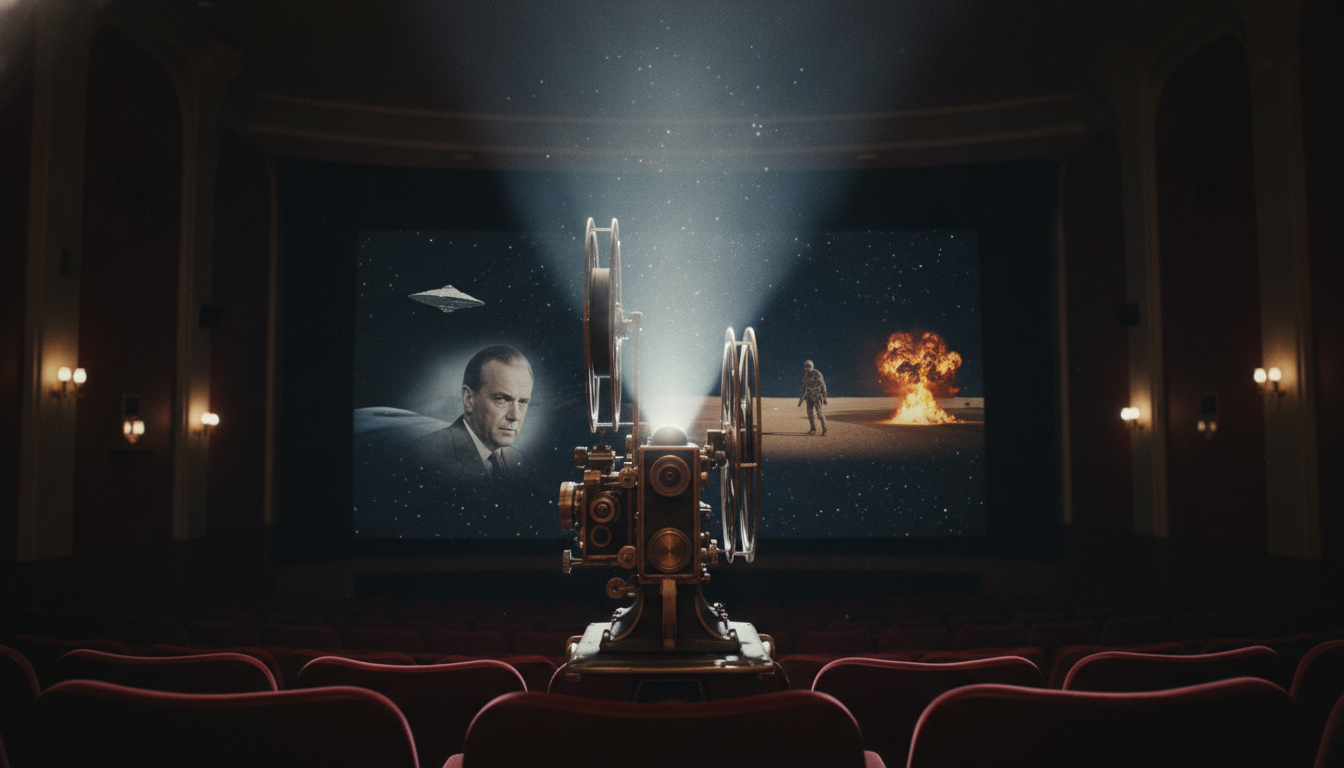
In an age where every living room boasts a high-definition screen and streaming services deliver an endless bounty of content to our fingertips, a critical question looms: has the traditional cinematic experience become an anachronism? Yet, as recent blockbusters like Dune: Part Two and Oppenheimer shatter box office expectations and ignite fervent discussions about their visual and auditory grandeur, it becomes abundantly clear that the allure of the darkened theater, the colossal screen, and the thunderous sound system remains potent. This isn’t just about watching a film; it’s about surrendering to a collective ritual, a journey into the heart of visual storytelling in cinema that home viewing, however advanced, simply cannot replicate.
The Art of Illusion: A Deep Dive into Filmmaking’s Evolution
The journey from the flickering novelty of the Lumière brothers’ Arrival of a Train at La Ciotat Station to the hyper-realistic worlds crafted by today’s digital artists is a testament to the relentless evolution of filmmaking. Early pioneers like Georges Méliès understood cinema’s power to transport, employing groundbreaking practical effects to create fantastical narratives. The silent era, far from being truly “silent,” relied on live music and intertitles, showcasing an early form of immersive storytelling. The advent of synchronized sound in The Jazz Singer (1927) revolutionized the medium, opening new avenues for character development and narrative depth. Later, the introduction of vibrant color, widescreen formats like Cinemascope, and sophisticated special effects—from the stop-motion wizardry of Ray Harryhausen to the digital marvels of Industrial Light & Magic—consistently pushed the boundaries of what was possible on screen.
At its core, cinema is an art of illusion, a meticulously crafted dance of light and shadow, movement and stillness. Directors like Orson Welles in Citizen Kane (1941) pioneered deep focus cinematography, allowing multiple planes of action to remain sharp simultaneously, demanding the viewer’s eye to explore the frame. Stanley Kubrick’s 2001: A Space Odyssey (1968) stands as a monumental example of visual storytelling in cinema, conveying complex philosophical ideas with minimal dialogue, relying instead on breathtaking cosmic vistas and iconic imagery. More recently, the kinetic chaos of George Miller’s Mad Max: Fury Road (2015) demonstrated how precise editing, practical effects, and a relentless pace can create an almost visceral experience, a masterclass in controlled pandemonium that is truly appreciated on a grand scale. These films, across generations, underscore that the medium’s strength lies not just in what it shows, but how it shows it.
Equally critical, yet often underestimated, is the impact of sound design in movies. Far beyond mere dialogue and a musical score, sound creates atmosphere, builds tension, and guides our emotional response. Think of the disorienting, omnipresent helicopter blades in Francis Ford Coppola’s Apocalypse Now (1979), which become a character unto themselves. Or the almost unbearable silence punctuated by terrifyingly subtle rustles in John Krasinski’s A Quiet Place (2018), where sound—or the lack thereof—is the very fabric of fear. Christopher Nolan’s Dunkirk (2017) utilized Hans Zimmer’s ticking score and a meticulously layered soundscape of waves, gunfire, and desperate whispers to plunge audiences directly into the harrowing experience of war, a testament to how sound can be as immersive as any visual.
The Theatrical Connection: Beyond the Living Room
This brings us to the irreplaceable big screen experience. While home theaters have advanced remarkably, they cannot replicate the sheer scale, the engulfing darkness, and the absence of domestic distractions that define the cinema. The screen isn’t just large; it fills your peripheral vision, eliminating the outside world and drawing you completely into the film’s reality. This immersive quality is precisely what current movie theater trends are capitalizing on, pushing the boundaries of what a cinema can offer.
Premium theater formats like IMAX and Dolby Cinema are at the forefront of this revolution. IMAX, with its gargantuan screens and specially designed projection systems, delivers unparalleled visual clarity and brightness, making every detail pop and every landscape breathtaking. When a film like Avatar: The Way of Water is presented in IMAX 3D, the sense of depth and immersion transcends mere viewing; it becomes an almost tangible journey into Pandora. Dolby Cinema, on the other hand, combines Dolby Vision (with its incredible contrast and color accuracy) with Dolby Atmos sound. Dolby Atmos is not just surround sound; it’s object-based audio that places individual sounds precisely in a three-dimensional space, including overhead, creating a truly enveloping auditory experience. A spaceship flying overhead doesn’t just pass from left to right; you feel its trajectory above you. Even formats like 4DX add physical sensations—wind, mist, seat vibrations—further blurring the line between viewer and narrative.
But beyond the technological marvels, there’s the intangible magic of communal viewing. The shared gasp at a plot twist, the collective laughter, the palpable tension during a suspenseful sequence—these are experiences amplified by the presence of a hundred strangers sharing the same emotional journey. It’s a fundamental aspect of human connection, a shared vulnerability in the face of powerful storytelling that transforms a simple movie outing into a memorable cultural event.
The Final Takeaway: Reclaiming the Spectacle
The cinematic experience is not just a relic of the past; it’s an evolving art form that continually redefines its potential. From the earliest flickering images to today’s hyper-realistic digital landscapes and object-based soundscapes, the history of cinematic techniques demonstrates a consistent drive towards greater immersion and emotional resonance. While streaming offers convenience, it often sacrifices the very elements that make cinema a truly transformative art form.
So, the next time you consider watching a highly anticipated film, pause. Reflect on the meticulous craft that went into its visual storytelling, the hours dedicated to its sound design, and the centuries of innovation that led to its creation. Then, make the pilgrimage to your local cinema, especially one equipped with premium theater formats. Support the spaces that keep this grand tradition alive. Don’t just watch a movie; experience it. Let the darkness envelop you, let the sound wash over you, and let the colossal image transport you. For in that shared darkness, the true magic of cinema endures, a powerful, collective dream that only the big screen can fully deliver.